3D – Acoustic Guitar
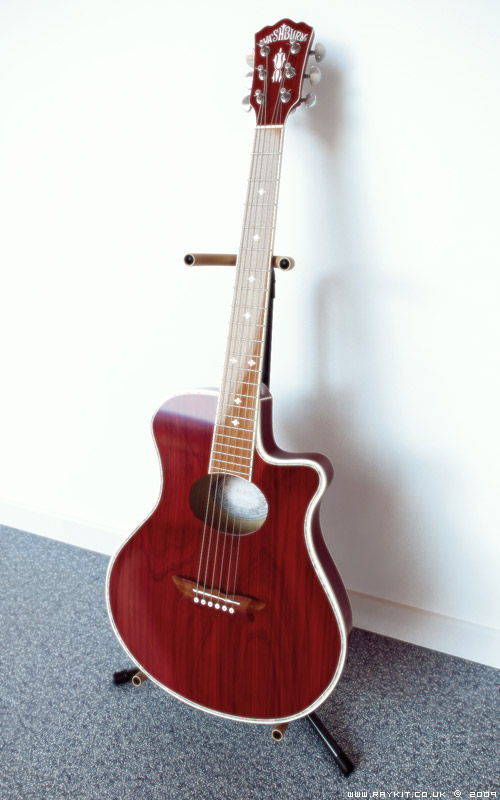
[Model: Washburn EA-18 Acoustic Guitar]
Here are the completed renders of my 3D acoustic guitar model. After modeling the guitar which you can view the WIP images here, I begun applying individual material to each part of the guitar and for most parts it only needed diffuse colour and reflection setting changing.
For the main parts of the guitar such as the neck and body, it needed UVW unwrapping in order to apply the wood texture and the edge binding correctly. The process for this part was removing the meshsmooth modifier first and unwrapping the model at its lower poly stage, then adding the meshsmooth back afterwards and rendering the UVW template.
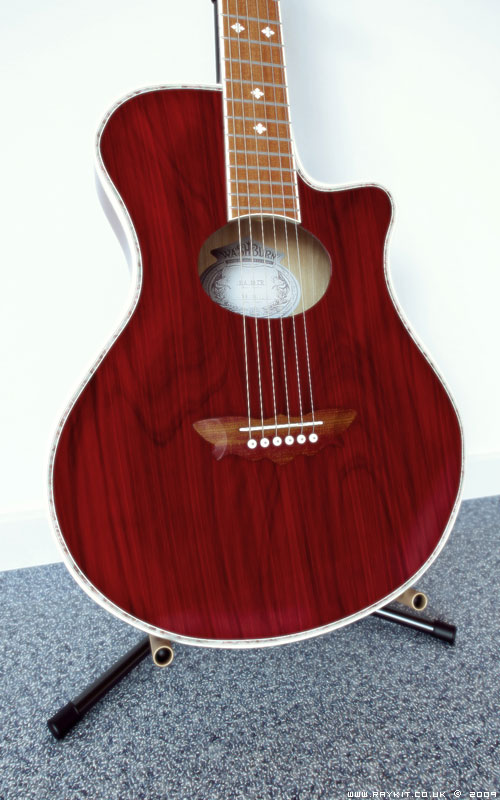
For the texturing, I used photoshop with stock images from cgtextures.com. The wood texture of the guitar were a combination of two layer of wood images that had different grains and combined together using the blending mode.
The logo detail and the branding sticker were photos I’ve took of my guitar and then incorporated into the texture.

The lights that were used in the scene were 1 vray dome light with HDRI, 1 vraylight, 1 spotlight and 1 omni light. The omni light helped bounce the light inside the hole of the guitar body and made the texture detail more visible.
A lot of time were spent experimenting with different HDRI to create the right look for the scene. As there was already a lot of wood texture on the guitar, I didn’t want to have wood texture on the floor as well, so I’d decided to go with blue carpet with a displacement map added to raise the fabric up alittle.

Certain areas of the scene were too bright and had washed away some of the details, so in the V-Ray setting, I’ve altered the colour mapping from Linear multiply to Reinhard which toned the brightness down and brought back the details in. This had also helped decreased the rendering time a fair bit.
Each rendered image took just over an hour to render at a much larger resolution. An ambient occlusion and depth of field map were also rendered for each image and incorporated in the post-production stage using Photoshop.

Overall, I’m pleased with the outcome of the renders. It was fun incorporating all the different materials in and seeing it react with the HDRI environment.